
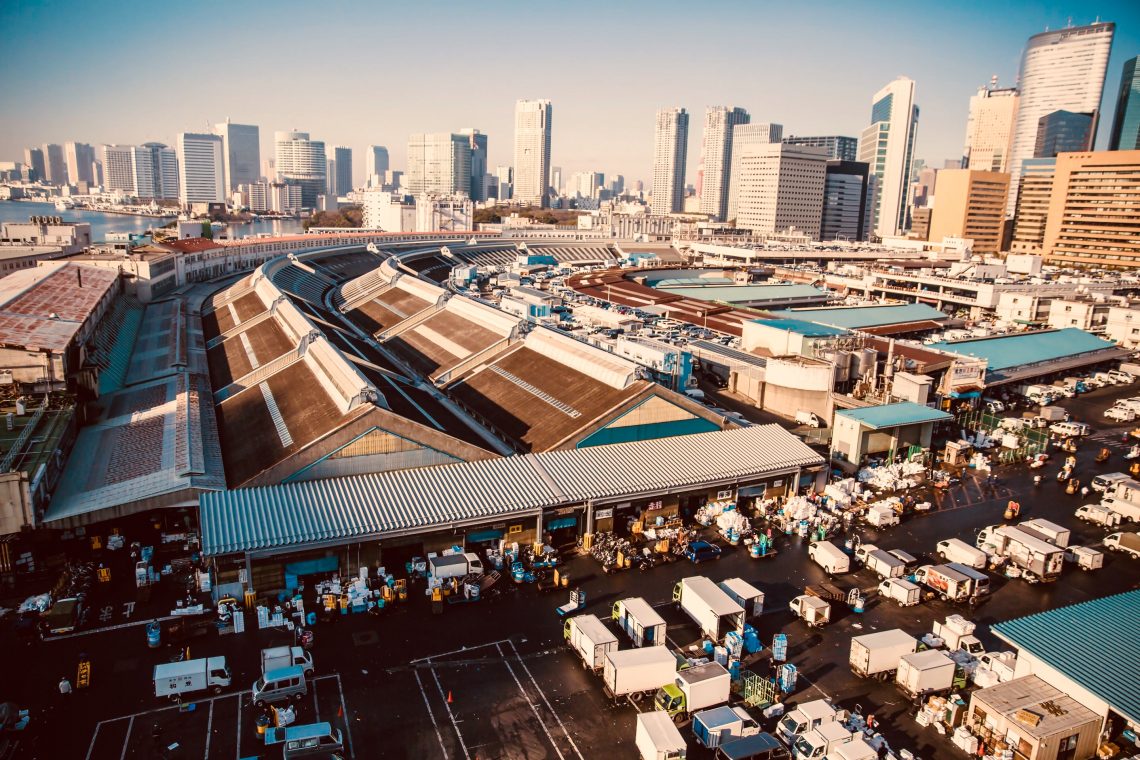
On October 6, 2018, Tsukiji, once considered the world’s largest fish market, permanently closed the doors of its historic site to move to a modern location in Tokyo Bay.
The massive warehouses at Tsukiji had undoubtedly aged poorly, with asbestos in many buildings, overcrowding issues, and severe hygiene concerns due to thousands of rats. Yet, the roughly 900 businesses operating at the market, the bells marking the start of auctions, the shouts of auctioneers, the displays of tuna, the spectacular sales, and the time-honored gestures of fishmongers embodied the image and soul of the old Tsukiji market. Since 1935, Tsukiji had been the main supplier of seafood to the Tokyo metropolis. The numbers were staggering: over 500 different seafood products, 3,000 tons of goods daily, 42,000 people on-site, and more than €15 million in daily revenue.
Since the early 2000s, plans to relocate to the new Toyosu site—2 kilometers further south in the Kôtô district—had been in the works, repeatedly scheduled and delayed. In 2016, the local government finally invested in rehabilitating the new 40-hectare space, which was previously occupied by a gas plant. The new location boasts modern, sterile facilities with advanced refrigeration systems and stringent sanitary standards, limiting tourist access to dedicated viewing galleries separated from the market by glass walls. The decision to relocate was finalized in July 2018 to prepare Tsukiji for a new chapter tied to the 2020 Olympics. The historic site would become a parking lot for visitors and delegations.
All that remains—for now—is the outer market, home to small restaurants and vendors, offering a final glimpse into Tsukiji’s rich history. How long this will last remains uncertain.
Photo : Kodawari Ramen, DR.